Keeping on Their Toes
If a unit owner has trouble making mortgage payments, can non-payment of condo fees be far behind? In what feels almost like a “tough love” scenario, experts are encouraging condo boards to be proactive about collecting late fees, even though New England communities have not been hit as hard as those in other parts of the country. Read More
Talking Trash
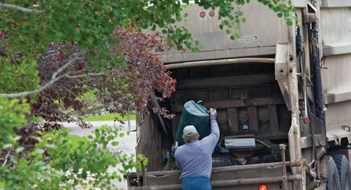
They pay the same property taxes, and pull electricity from the same wires; their residents go to the same schools and libraries, and vote for the same municipal officials. Yet there is one marked difference between many condominiums and their single-family house neighbors: trash. In towns and cities where the governments provide free trash pickup to single-family houses, condominiums are often required to foot the bill for the same service.Although this is certainly not a new issue, sharply rising costs for trash removal—and rising property taxes—are prompting condominium associations to re-examine the fairness of the situation. Following a number of successful campaigns across the country, many condominium residents throughout New England have organized and are pressing the local governments with renewed vigor for equality in municipal services. Read More
Cable Ruling Opens up Competition
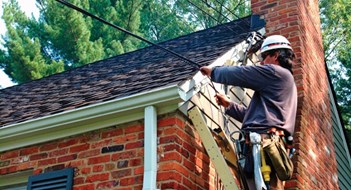
In a far-reaching ruling that affects condominiums across the country, the Federal Communications Commission (FCC) recently banned exclusive contracts between cable TV providers and multi-family dwellings. The ban, which went into effect March 7, has been hailed as long overdue by consumer groups. Read More
Conservation on the Line
From Connecticut to California, homeowners—including condominium-dwellers—are looking for ways to cut energy expenses. And, increasingly, their attention has focused on an appliance recognized as an energy hog: the clothes dryer. Read More
Community Law in the News
Clothesline legislation is not the only community association issue in the news these days. A look around New England and the US finds action on a variety of community association legal concerns. Read More
Community Perspectives
All condominium lawyers have “war stories” that they relish telling. In fact, when attorneys gather, you can hear a veritable festival of such war stories. While most community associations operate in an environment that is rather uneventful, learning from the mistakes of those that become fodder for war stories can be instructive to all. I asked Attorney Frank Flynn, the managing partner of Boston’s Downing & Flynn, a law firm specializing in condominium law, to see if he had discerned any behavioral patterns and traps that lead to “war story” creation. Frank came up with five key “behavioral trap” areas. Read More
Legal Issues
As the population ages, homeowner association boards and property managers are more frequently dealing with requests from condominium and cooperative owners and residents to accommodate a handicap or disability by adding to or changing the common areas in some way. These requests vary from the relatively simple and inexpensive, such as leveling an uneven step to allow wheelchair access or installing a handrail for support, to the more “politically” complicated, such as providing a handicapped parking space closer to a front or rear door, allowing a washer/dryer in a unit when washers and dryers are prohibited in all other units; or allowing a pet when pets are prohibited. Read More
Providence Rising Again
Providence is developing a reputation. After decades of depression and a certain ignominy, the city is once again finding its feet. In spite of a struggling national economy, overall this up-and-comer is capitalizing on housing, business and the arts. Now widely-known as the “Renaissance City,” people from all over the world are flocking to its shores to live, visit or do business. Read More
Legal Issues
A cracked sidewalk, a leaking pipe, or broken light bulbs are all conditions frequently encountered in the condominium common areas. Read More