



Most U.S. municipalities have local laws on their books governing how exterior building façades must be inspected, maintained and repaired. While such legislation is occasionally enacted at the state level, generally these laws are a local matter. And while the specific rules and requirements may differ slightly from city to city, the basics are the same; they’re designed to maintain structural integrity and prevent the tragic accidents that can occur when masonry, metal cladding, ice, or unsecured rooftop items dislodge or deteriorate and fall onto busy sidewalks below.
The Back Story
Façades and exteriors are complex, integrated systems, often composed of more than one type of material. They may be masonry, glass, metal, or a combination of all three, and often contain steel frame components as well. Over time, different materials age and deteriorate at different rates and for different reasons.
For example, masonry façades, as well as parapets and many decorative architectural components are generally held together with concrete—and while brick or stone expands over its lifetime, the concrete pointing between those surfaces shrinks. These opposing forces inevitably cause material bonds to loosen over time, leading to potential hazards to both the building itself and those passing by it. In colder climates, ice and snow can accumulate in the gaps caused by those loosened materials, the freeze-and-thaw cycle further accelerating the problem and causing additional potentially deadly scenarios.
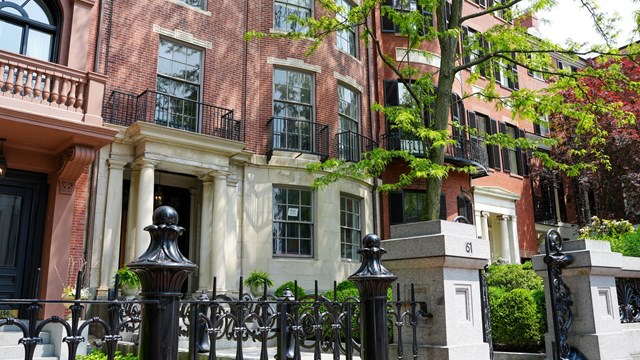
The granddaddy of façade inspection laws, New York’s Local Law 10, was famously passed in 1980 after a Barnard College student was struck and killed by a falling piece of building masonry. Boston was one of the first big cities to follow New York City’s lead, instituting its own façade ordinance around 1995, says Stephen McDermott, an engineering consultant with Charlestown, Massachusetts-based SOCOTEC AE Consulting.
“High-rise inspections are required to be performed on all buildings over 70 feet tall,” he says, “and that applies to any type of building—not just residential buildings. There aren’t any differing requirements for shared-interest community buildings such as condominiums or HOAs, and the focus of the effort hasn’t changed since its inception. It’s a review of tall structures in relation to potential falling hazards. The only criteria is that the height of the building is over 70 feet.”
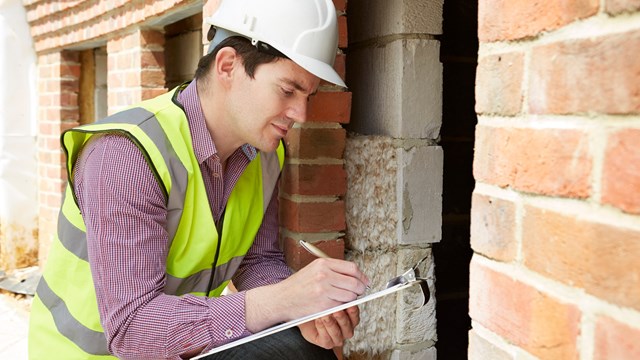
According to McDermott, “The façade inspection law requires a registered structural engineer or architect with relevant experience in high-rises [to conduct the inspection]. The engineer or architect identifies how they will perform the inspection, which, depending on the professional, could be by lift, swing, camera, drones, etc. They get a feel for the condition of the building, and complete an overall review of the structure. Life safety is primarily what it’s about—are there any life threatening items?—but they’re also looking at the watertightness of the structure” to head off problems caused by moisture infiltration.
Requirements and regulations are one thing; the rules are right there, spelled out in black and white. Compliance with those rules is often the challenging part. Most trustees and board members are not building management professionals, much less structural specialists who know what’s required to maintain a building envelope or comply with façade maintenance rules. That’s why obtaining competent professional advice—and following through on it—is key to staying right with both the letter and the spirit of these important safety regulations.
It’s also important to remember that the boards of shared interest communities like condos and HOAs have a fiduciary responsibility to their residents, and compliance with local inspection mandates is only part of that duty; McDermott notes that board members must also act to remedy any hazards uncovered by those inspections, and act quickly.
“The big thing to keep in mind is that once someone finds a hazard, work must be undertaken immediately to correct the problem,” he stresses. “You can’t sit on it out of concern for how much it will cost the building to make the required repairs. The various City departments in charge of compliance don’t care. The ownership entity must do the work to make it safe immediately.”
Local façade inspection and maintenance laws are there to keep both the public walking by the property and the properties’ residents safe. On top of the risk of potential injury or even death from deteriorating masonry, the legal liability resulting from such an accident could easily destroy the financial solvency of an association or corporation. With stakes this high, it’s imperative for trustees to stay on top of the requirements laid out by local laws and ordinances governing façade maintenance and inspections and to make necessary repairs quickly and thoroughly. That potentially saves lives and provides financial protection to the community.




Leave a Comment