


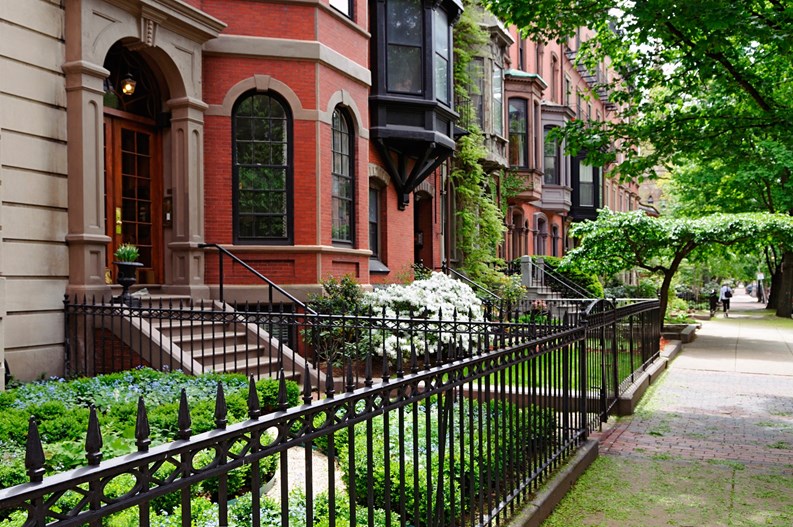
The history of multifamily housing in Boston’s Back Bay is one of reclaimed land, historic prestige, and sky-high property values. Originally a stagnant tidal basin, the area was filled in between 1859 and 1900 to create a French-inspired street grid for the city’s elite. While initially conceived as a neighborhood of grand, single-family townhomes for ‘proper’ Bostonians, the economic shifts of the mid-20th century transformed and reformed its residential character.
Of Brownstones & Boarding Houses
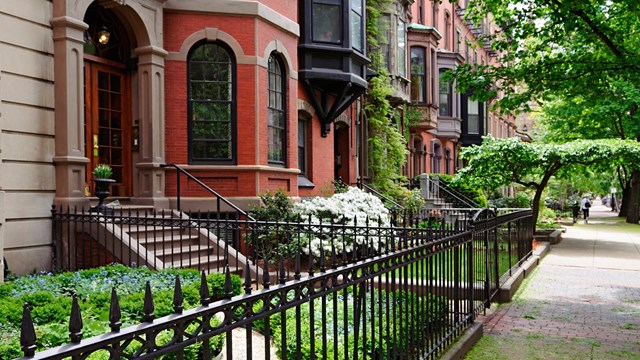
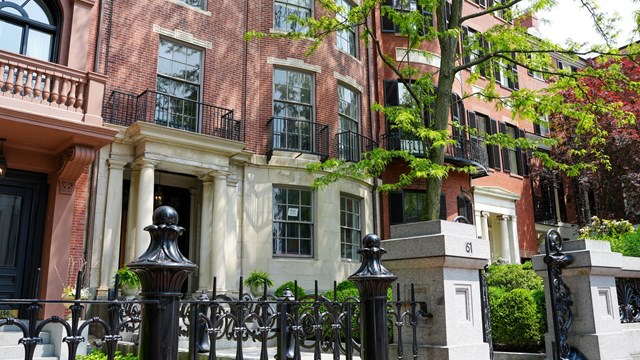
The Back Bay’s housing stock is renowned for its classic 19th century Victorian brownstones, characterized by high ceilings, ornate cornices, and elegant bow-front windows. As the wealthy migrated to the suburbs following World War I, many of these mansions were subdivided into smaller apartments, or converted into boarding houses. Today, roughly 78% of Back Bay real estate consists of multifamily units, ranging from original rowhouses converted into intimate condo associations, to grand Beaux-Arts cooperatives and modern luxury high-rises.
Demographically, Back Bay evolved from a homogenous enclave of the 19th-century upper class to a dense, transient urban hub by the mid-20th century, as the area became more affordable and attracted students and bohemians—but the condominium conversion boom of the 1970s sparked a rapid ‘re-gentrification’ that continues to define the market.
Pricing has skyrocketed accordingly; where median residential prices sat around $250,000 in the 1980s, the 2026 market sees median sales exceeding $1.7 million, and average rents frequently topping $4,800 for even a one-bedroom unit. The neighborhood remains a unique ‘living museum’ where strict architectural commissions preserve its historic 19th-century facades, even as interiors are modernized into New England’s most premier multifamily assets.




Leave a Comment